












A garage door company winning same-day repairs
An example playbook for a garage door company that wants to win more same-day spring and opener repairs by answering fast and pricing clearly.
The situation
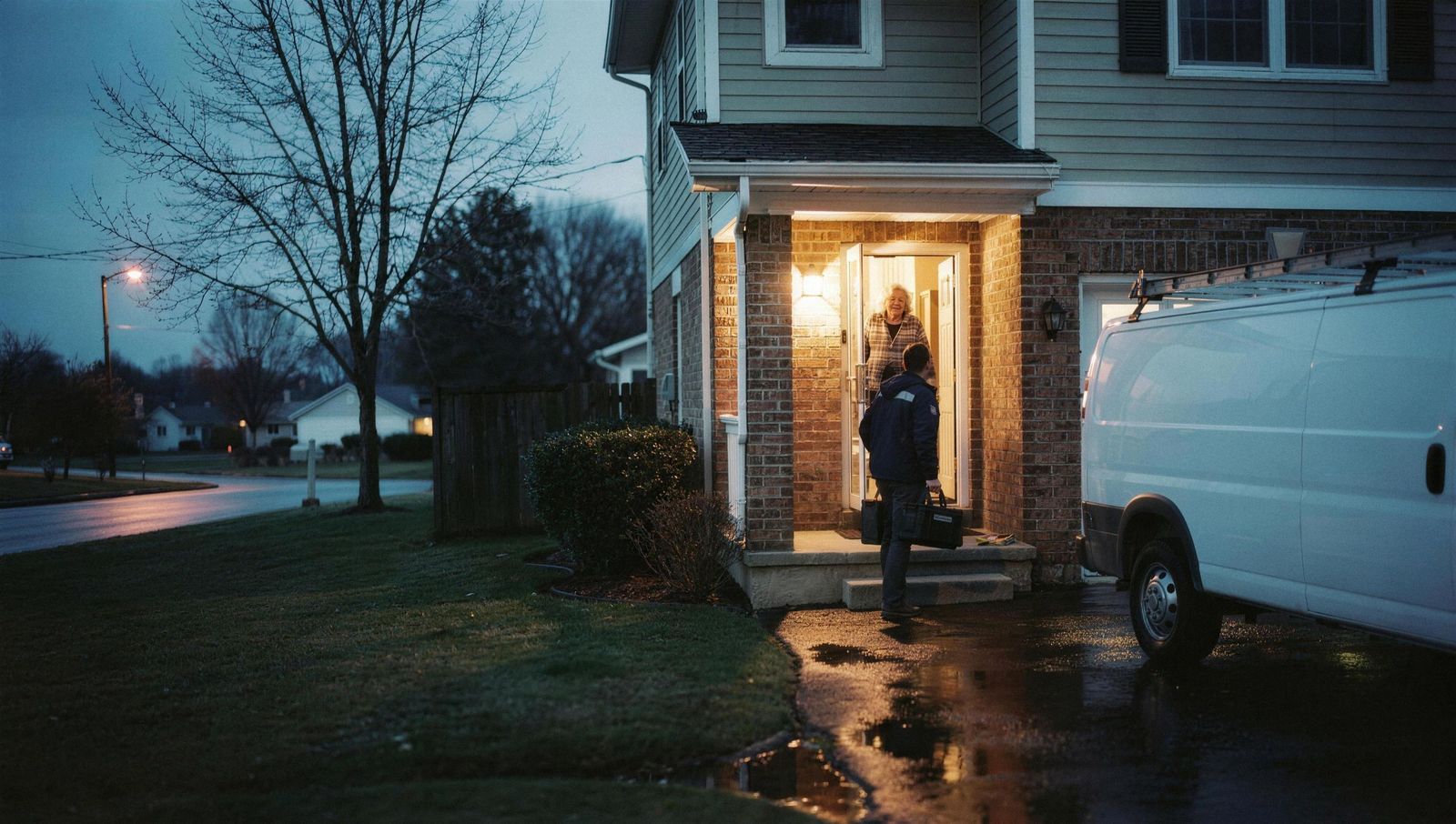
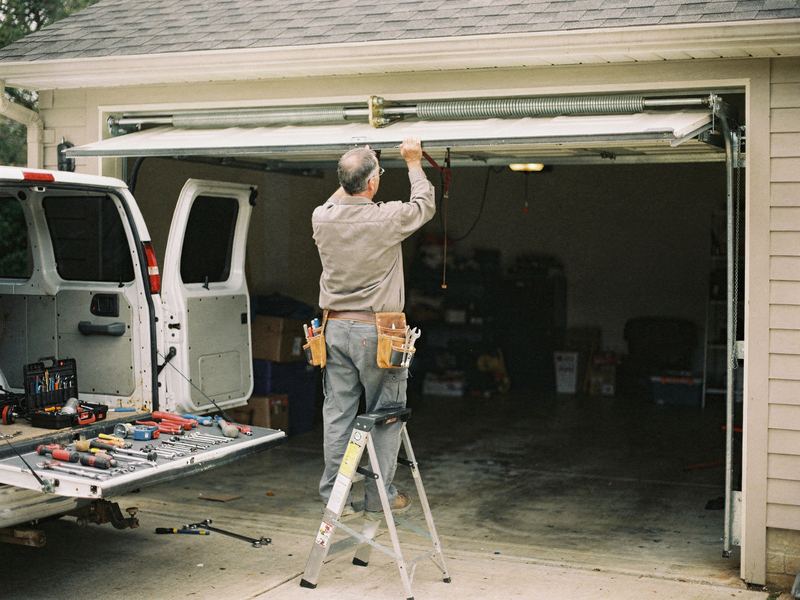
This is an example, not a customer story. Say you run a garage door company with two techs in well-stocked vans and a part-time office manager. Your bread and butter is the urgent repair. A torsion spring snaps with a bang, the car is stuck inside, and the homeowner is late for work. They search on their phone, call two or three companies, and book whoever picks up, offers a time today and sounds straight about price.
That should be you. Your techs are good and your vans carry the common parts. But the office manager leaves mid-afternoon, and after that calls go to voicemail while both techs are on ladders. Your Google profile still shows hours that end earlier than your techs actually work. Your website has no prices at all, so a caller who has heard about a cheap service call turning into a big bill keeps shopping.
When a tech does get the job, they sometimes arrive without knowing the door type, the spring setup or the opener brand. If the part isn't on the van, it's a second trip, and the customer waits another day.
What's getting in the way
- Missed calls. The calls that matter most come in while everyone's hands are full, and after the office closes.
- No price guidance. Without even a range, callers keep dialing until someone gives them a number.
- Google doesn't match reality. Hours, service area and services on your profile are out of date.
- Blind arrivals. Techs arrive without photos or door details and sometimes without the right part.
- Waiting in the dark. Customers stuck at home don't know when the tech will arrive, so they call again, or call someone else.
- Wariness about upselling. Homeowners worry they'll be pushed into a new door when all they needed was a spring.
The plan
Week 1: Fix the basics and catch every call
- You run the free AI report to see where you rank for "garage door repair near me" and "broken garage door spring" in your towns, and what your Google profile is missing.
- Zome updates your Google profile with accurate hours, the service area you really cover, and each repair listed as its own service.
- Missed-call text back goes live. The reply asks what your techs need to know: is the door stuck open or closed, does a spring look broken, what opener do you have, and can you send a photo of the springs above the door. The after-hours version gives an honest callback time.
- You set your same-day rules: a cutoff time for same-day bookings, your service call fee and whether you offer evening windows.
Weeks 2 to 4: Show prices and keep customers informed
- You set price ranges for common repairs: torsion springs, extension springs, cables, rollers, opener repair and opener replacement. Instant quotes show them on your site as starting ranges, with a promise that the final price is confirmed before any work starts.
- Zome builds a page for each repair type and each town you cover. Each repair page explains what the problem looks like and carries a clear safety note: don't try to lift a door with a broken spring, and don't adjust springs yourself.
- Job updates go out on every booking: a confirmation with the arrival window, an "on the way" text when the tech leaves the previous job, and a summary when the work is done.
- Techs look at the customer's photos before they roll. Over the weeks, you use what the photos show to adjust what each van carries.
Months 2 and 3: Earn trust and tighten the operation
- Review requests go out after every completed job, with the same neutral wording for everyone. You reply to each review, including the critical ones.
- On site, techs present repair options in writing before starting, with the repair the customer called about first. A new door only comes up when the old one really can't be fixed well.
- You and Zome look at when calls come in and how many missed calls were recovered by text. If evening demand is steady, you decide whether an on-call rotation makes sense.
- Once same-day work is running smoothly, you can add a yearly tune-up reminder for repair customers. Our guide to customer retention covers how to do that without being a nuisance.
What Zome does and what you do
| Task | Zome | You |
|---|---|---|
| Google profile | Updates hours, services and service area | Give accurate hours and only list what you can staff |
| Missed calls | Texts every missed caller with your questions | Approve the wording and call back fast |
| Price ranges | Shows your ranges on the site | Set the ranges and honor them |
| Repair and town pages | Builds pages for each repair and area | Check the technical details and safety notes |
| Job updates | Sends confirmations, on-the-way texts and summaries | Keep the schedule current so updates are accurate |
| Photos before arrival | Collects them with each request | Review them and load the right parts |
| Reviews | Sends fair requests and suggests replies | Reply to every review |
| Reporting | Shows calls, missed calls recovered and bookings by source | Mark completed jobs and any second trips |
What to track
- Calls answered live versus missed. Tells you when you're losing the race to answer.
- Missed calls that became jobs. Shows whether the text back is doing its job.
- Time from first contact to a confirmed window. Speed is what wins this kind of work.
- Same-day completions. The promise you're selling, measured honestly.
- Second trips for parts. Each one is a delay for the customer and a cost for you.
- Calls by hour and day. Tells you whether longer hours would pay for themselves.
- Review count and recency. Recent reviews reassure someone choosing in a hurry.
Common mistakes to avoid
- Publishing a price you don't honor. A customer whose bill grew at the door will remember it, and may say so in a review.
- Promising a callback after hours and not making it.
- Pushing a new door on a repair call.
- Suggesting homeowners fix springs themselves. It's dangerous work.
- Listing hours on Google that you can't actually staff.
Your first step
Run the free AI report to see how your business shows up when someone's spring breaks, and which companies are ahead of you on Google. Or book a demo to set up this plan with your own prices and service area.


The easiest way to grow your service business online.
Get your free AI report in about a minute, then see exactly what Zome would fix first.