





An HVAC shop winning more system replacements
An example plan for an HVAC shop that loses replacement bids: clear options, faster proposals, honest follow-up, and a website that explains the decision.
The situation
Imagine an HVAC shop with four technicians and an owner who does most of the replacement estimates himself. They've been in business about nine years. Their repair work is solid and their tune-up customers stay loyal. But when a system is old, repairs are getting expensive and the homeowner starts thinking about a new one, the shop often loses the job.
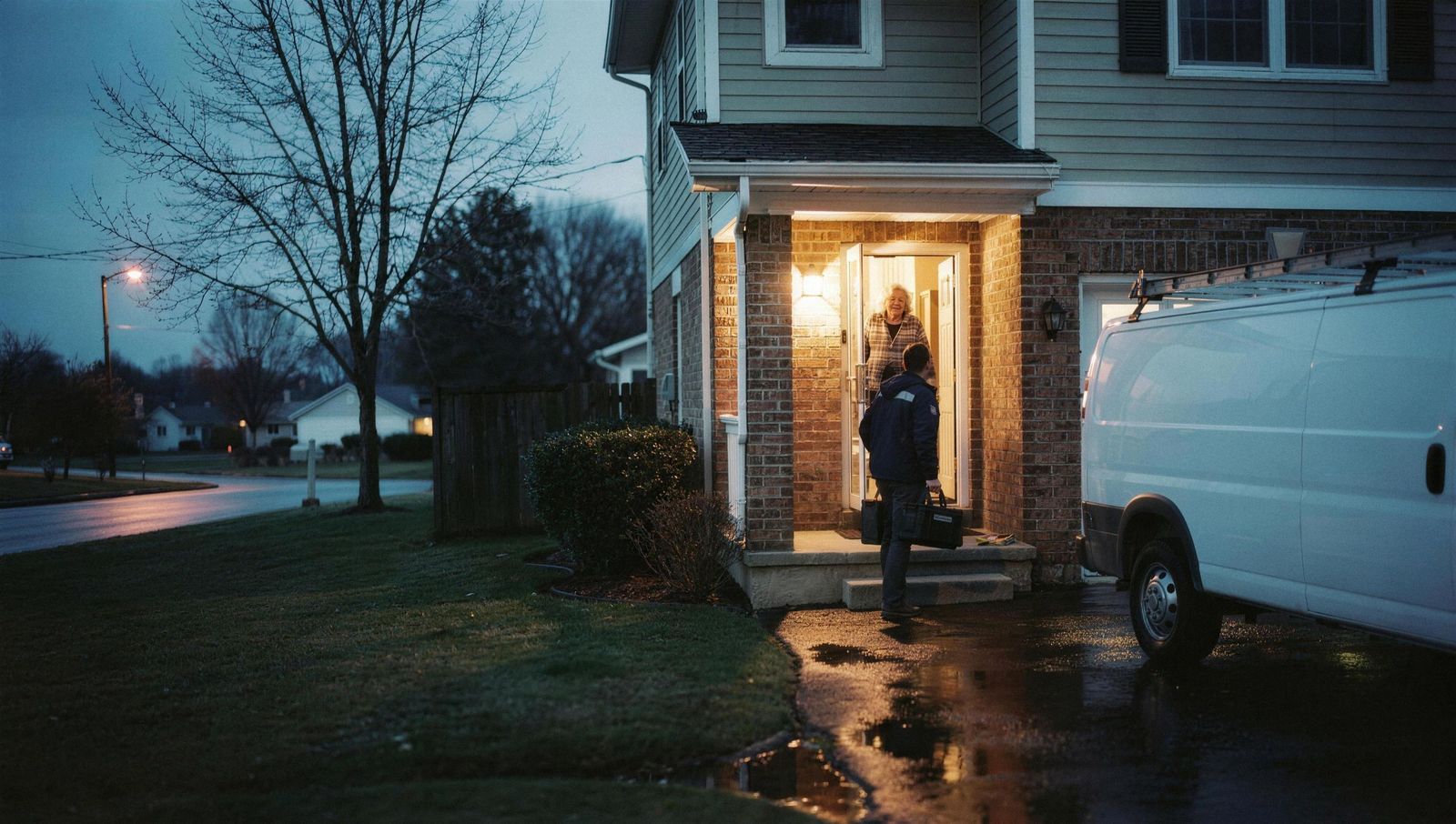
Here's how it usually goes. A tech diagnoses a failing compressor or a cracked heat exchanger and mentions replacement. The owner visits a day or two later, measures, looks at the ductwork and writes up one price on a form. The email goes out when he gets a chance, sometimes three or four days later. The homeowner is also getting quotes from two other companies, one of which sent a tidy proposal with options the same evening. After that, silence. Nobody at the shop follows up, so they never learn whether they lost on price, trust, timing or simply being forgotten.
The owner doesn't want to become a high-pressure sales shop. He wants his quotes to be as clear and as fast as his repair work, and to give homeowners the information they need to choose well.
What's getting in the way
- One price, no options. A single number forces a yes-or-no decision and invites the homeowner to compare it with quotes that include different equipment and scope.
- Slow turnaround. Days between the visit and the proposal give competitors time to get there first.
- No follow-up. A proposal with no check-in looks like a shop that doesn't want the job.
- A website that doesn't help. There's nothing about replacements, what affects the price, or how installation day works.
- Few install reviews. Reviews mention fast repairs, not clean installs, so a homeowner comparing shops has little to go on.
- Confusion about rebates and financing. Homeowners ask about utility rebates, tax credits and payment options, and the answers change often.
The plan
Week 1: Set a standard for every replacement estimate
The owner and Zome agree on what every replacement estimate will include:
- Two or three options. For example, a like-for-like replacement, a higher-efficiency system and a heat pump option where it makes sense for the home. See good, better, best pricing for how option pricing works.
- What's included in each. Removal and disposal, permit, thermostat, any duct or electrical changes, warranty registration and the post-install check.
- Proper sizing. Each option is based on a load calculation, not a rule of thumb or the size of the old unit.
- A turnaround promise. Proposals go out within a set time after the visit, which the owner picks and sticks to.
The owner also gathers photos of past installs, with homeowner permission, and writes down his honest answers to the questions he hears most.
Weeks 2 to 4: Faster, clearer proposals and a follow-up that feels human
Zome sets up proposals with a template the owner fills in from his phone after the visit. Each proposal shows the options side by side, photos of the customer's current equipment, a plain description of what changes with each option, what happens on installation day and the owner's prices. He can send it from the driveway.
Every open estimate appears in the lead inbox with its status. Zome runs a short follow-up sequence the owner has approved:
- The next day: "Any questions about the options? Happy to walk through them on a call."
- A few days later: a short note on what installation day looks like, with photos of a real install.
- About a week after that: a reminder for the owner to call personally.
If the customer says they've chosen someone else, the sequence stops and the owner asks one question: "Would you mind telling me what made the difference?" That answer is worth more than any guess.
On the website, Zome builds a system replacement section: repair versus replace in plain language, what affects the price (size, efficiency, ductwork, access, electrical), what installation day involves and how warranties work. For rebates and financing, the page links to the official utility and government program pages rather than promising amounts. If the shop offers financing through a lender, it describes it only in the way the lender's rules allow.
Months 2 and 3: Earn trust before the estimate
Review requests go out after every completed job, including every install. Each customer gets the same short request with a direct link. Over time, this builds a set of recent reviews that talk about installs, not just repairs.
After each install, a short check-in goes out a few weeks later asking how the system is running, with an invitation to join the shop's maintenance plan if they have one.
Zome also sets up a respectful email to past customers who agreed to hear from the shop and whose equipment is getting older, based on the techs' notes. It isn't a scare message. It explains how to tell when replacement is worth considering, offers a free planning conversation and says clearly that there's no pressure to act before the system actually needs it.
At the end of each month, the owner reviews every estimate: which option was chosen, how fast the proposal went out and any reasons given for losses. He adjusts options, wording or follow-up timing based on what he learns.
What Zome does and what you do
| Task | Zome | You |
|---|---|---|
| Estimate standard | Provides a checklist and example option structures | Choose the equipment, scope and turnaround promise |
| Sizing | Leaves space in the template for the load calculation | Do the calculation for every home |
| Proposals | Builds the template and plain-English descriptions | Visit the home, fill it in and set every price |
| Follow-up | Sends the agreed check-ins and reminds you to call | Make the call and ask why when you lose |
| Replacement pages | Writes and builds them with your photos | Approve the content and supply real install photos |
| Rebates and financing | Links to official program pages | Confirm details and follow your lender's rules |
| Reviews | Sends the same request after every job | Reply to reviews with Zome's suggested drafts |
| Past-customer email | Writes and sends to opted-in customers | Approve the message and the list |
What to track
- Replacement estimates given. Your base number for everything else.
- Time from visit to proposal. The simplest thing to improve and one of the easiest ways to stay in the running.
- Close rate on replacements. Whether the new approach is working.
- Option chosen. Tells you what homeowners value and helps you set sensible options.
- Reasons for losses. Price, trust, timing or no response each point to a different fix.
- Follow-ups completed. Makes sure the sequence and personal calls actually happen.
- Install reviews. A growing set of recent install reviews helps the next homeowner decide.
Common mistakes to avoid
- Fear-selling on repair calls. Tell customers the truth about their equipment and let them decide. Pressure costs you the repair customers too.
- Offering only one extreme. A proposal with only the cheapest option or only the premium one gives the homeowner no real choice.
- Sizing by the old unit. The old system may have been the wrong size. Do the calculation.
- Promising rebates or tax credits. Programs change and eligibility varies. Point to official sources, and suggest customers ask their accountant about tax questions.
- Stopping after one email. Homeowners often need time and a chance to ask questions. A polite, planned follow-up is a service, not a nuisance.
Your first step
Get the free AI report to see how your business looks to a homeowner researching a new system, from your reviews to your website. Or book a demo to walk through a replacement plan for your shop and see which tools in it, like proposals, are available today.
The easiest way to grow your service business online.
Get your free AI report in about a minute, then see exactly what Zome would fix first.