
Contents
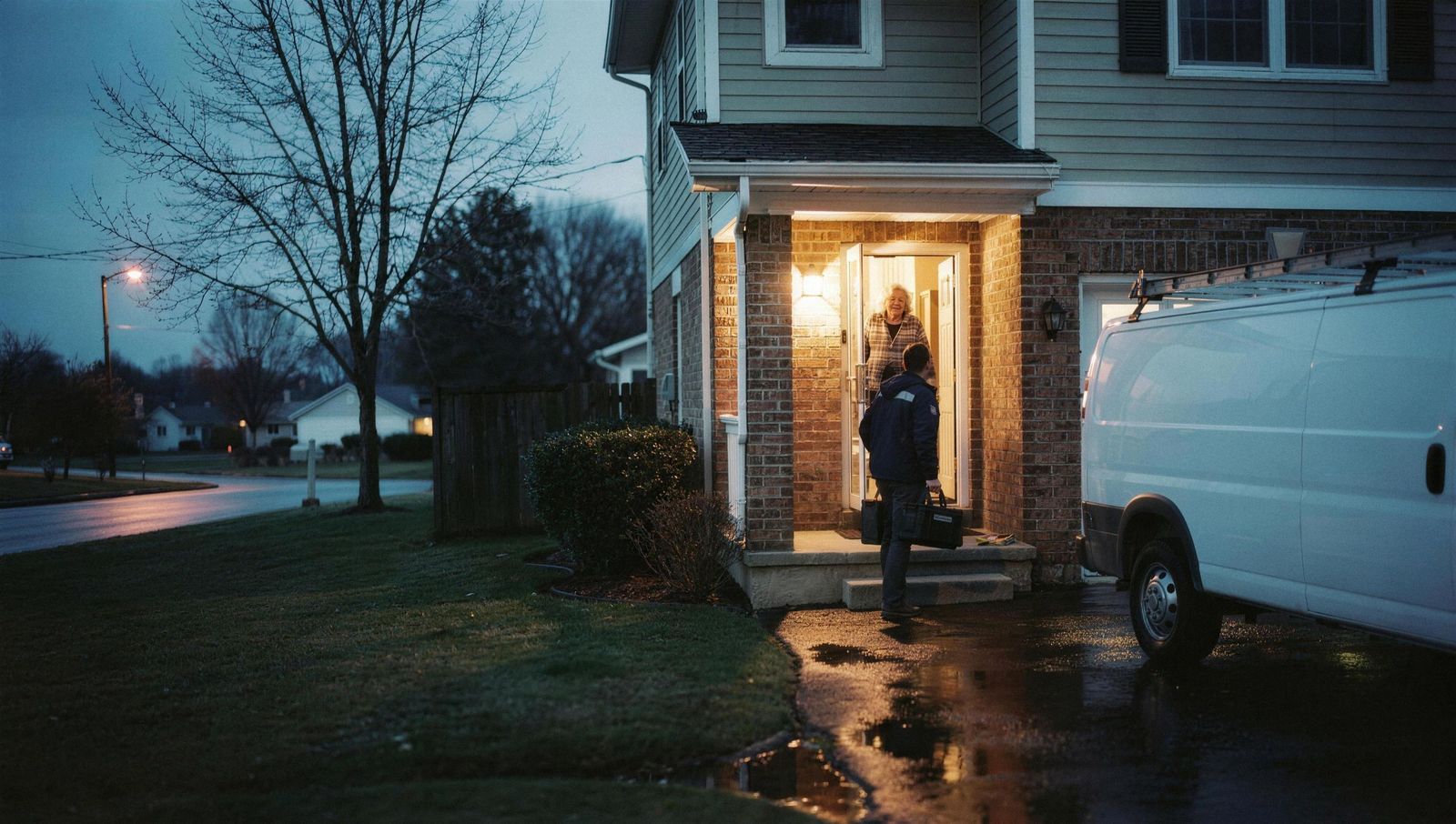
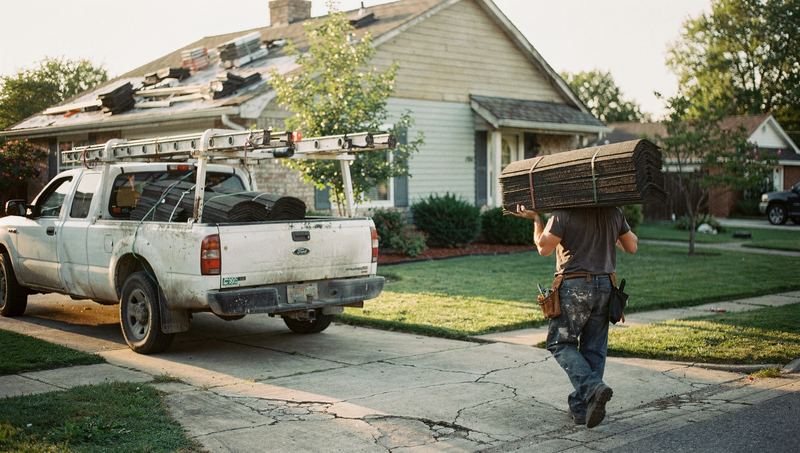
A homeowner is about to let a stranger into their house, near their kids, their pets and their things. Before you've touched a tool, they've already decided a lot about you from the truck in the driveway, the shirt you're wearing and how you knocked on the door. That's branding in the trades. It isn't a logo contest. It's everything that tells a customer you're legitimate, you'll show up and you'll treat their home with respect.
What a brand means for a service business
Your brand is what people expect when they call you. Your visual identity (name, logo, colors, trucks, shirts) is how they recognize you. The expectation is the part that matters, and in home services it comes down to a few questions every customer is asking:
- Will they show up when they said they would?
- Are they safe to have in my home?
- Will they tell me the price before they start?
- Will they fix it, and stand behind it if it breaks again?
Write one sentence that answers those questions the way you want customers to answer them. That's your brand promise. A few examples:
- Plumbing: "Straight answers, a clean house and the price before we start."
- HVAC: "On time, and we explain your options before you spend a dollar."
- Electrical: "Safe, up-to-code work, explained in plain English."
- Roofing: "Honest inspections, even when the answer is that you don't need a new roof yet."
- Landscaping: "Your yard, done every week, without you chasing us."
- Cleaning: "The same trusted team, every visit."
A promise only counts if your operations keep it. If your promise is "on time" and your techs routinely miss their arrival windows, no logo can save you. Pick a promise you can keep, then build the habits that keep it.
Start with the name
If you're naming a new business, or wondering whether to rename, run the name through these tests:
- Say it on the phone. Can someone spell it after hearing it once? Can they find you by searching for what they heard?
- Does it say what you do? A name like "[Town] Drain and Sewer" does the explaining for you. A name like "[Word] Solutions" needs a tagline to do it.
- Does it leave room to grow? A name with one town or one service in it can box you in. "[Town] Gutter Pros" is clear until you start doing roofs in the next county.
- Is it free to use? Check your state's business registry, search the federal trademark database and look for similar names near you. Check that a sensible domain is available. Ask an attorney before you commit, especially if a competitor's name is close.
Each style has trade-offs. An owner's name ("[Last name] Electric") feels personal and accountable, but it ties the brand to you, which can matter if you ever sell. A place name feels local. A descriptive name is clear. An invented name is distinctive but takes longer to mean anything.
One rule for Google: your Business Profile must use your real business name. Adding keywords to it, like "[Name] Electric Best Panel Upgrades Near Me," breaks Google's guidelines and can get the profile suspended. If you want a keyword in your name, it has to be your actual name everywhere: on your registration, your trucks and your signs.
Renaming an established business costs far more than naming a new one. There are wraps, signs, shirts, listings and your website to change, plus the reviews people left under the old name. A refresh (a cleaner logo, better colors, consistent lettering) often gets you most of what you want without starting over.
A logo and colors that work at 40 miles an hour
Your logo will live on a moving truck, an embroidered chest pocket, a tiny circle on Google Maps and a sticker on a furnace. Design for the hardest of those, not for a big screen.
- Legible at a distance and at small sizes. If you can't read it on a van across a parking lot, or as a thumbnail on your phone, simplify it.
- Works in one color. Embroidery, invoice stamps, vinyl lettering and equipment stickers often need it.
- Two or three colors at most. Choose colors that stand out from other trucks in your area rather than match them. Look through the Google Maps results for your trade in your town and notice what everyone else uses. If every plumber nearby is blue with a water drop, a different color and mark will help people remember you.
- Simple over clever. A clean wordmark with a simple icon is easier to read, embroider and recognize than a detailed drawing of a house, a wrench and a lightning bolt.
When the design is done, make sure you own the files: a vector version (SVG, EPS or AI), a PNG with a transparent background, a one-color version, and horizontal and stacked layouts. Then make a one-page brand sheet with your logo versions, exact colors (including the codes your printer, wrap shop and embroiderer ask for), your font, your tagline, your phone number and your website. Send it to every vendor so your trucks, shirts and door hangers match.
The truck is your biggest sign
A marked vehicle works every time it's driven or parked in a driveway, and neighbors notice whose truck is at the house next door. Most people see it for a few seconds at a stoplight or through a window, so include only what they need:
- Your name and logo, large.
- What you do, in a few words: "Plumbing, Drains, Water Heaters" or "Heating and Cooling."
- One phone number and your website.
- Your license number, if your state or city requires it on vehicles. Some do; check with your licensing board.
Leave off the long list of services, the paragraph of slogans and social media icons nobody can read at speed. High contrast and big letters beat detail.
Your options, from most to least visible, are a full wrap, a partial wrap, cut vinyl lettering and magnetic signs. Full wraps cost the most up front and make the strongest impression. Lettering is a solid start for a new business. Magnets are cheap and removable, which helps if you use a personal vehicle, but they can look temporary. Get quotes from a couple of local wrap shops and ask to see vehicles they did a few years ago, not just last month.
If you want to know how many calls the truck brings in, put a dedicated tracking number on it. Which calls came from where explains how to set that up.
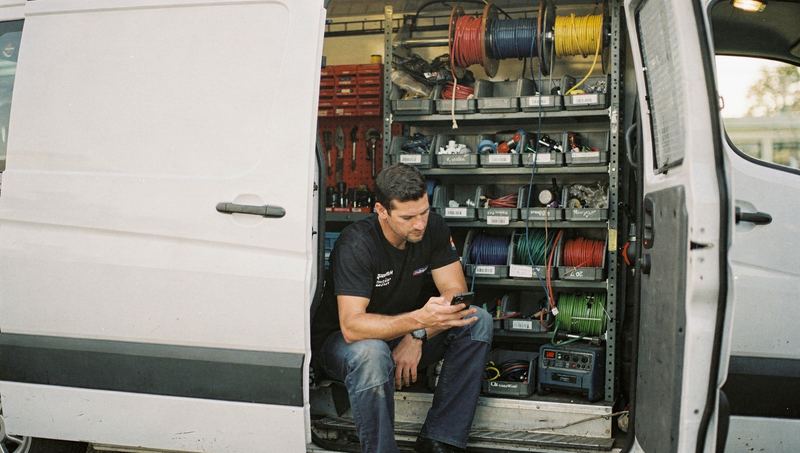
How the truck is driven and parked is part of the brand too. A lettered van tailgating on the highway or blocking a neighbor's driveway is advertising, just the wrong kind. Keep trucks clean inside and out, because customers glance in when the tech opens the door. The same goes for trailers: a landscaper's trailer or a roofer's dump trailer is a rolling billboard when it's tidy and a warning sign when it isn't.
Uniforms and the arrival routine
A uniform tells the homeowner that the person at the door is the person they were expecting. Keep it simple and consistent:
- One color family, your logo on the chest and the person's first name on the shirt or a badge.
- Matching options for every season: short sleeves, long sleeves, a jacket and a hat.
- Enough sets that nobody is wearing yesterday's shirt after a day in an attic.
- Gear that fits the trade: high-visibility layers where landscaping and roadside work require them, and branded aprons and caddies for cleaning teams.
Then write an arrival routine that every tech follows, because the first two minutes at the door shape the rest of the visit:
- Send a text before arrival with the tech's first name and photo, so the homeowner knows who is coming.
- Park so you don't block the driveway, or ask where they'd like you.
- Knock or ring, then step back from the door.
- Introduce yourself: "Hi, I'm [Name] with [Business name]. You called about the water heater? Before I come in, is there anything I should know, like pets, a sleeping baby or a room to avoid?"
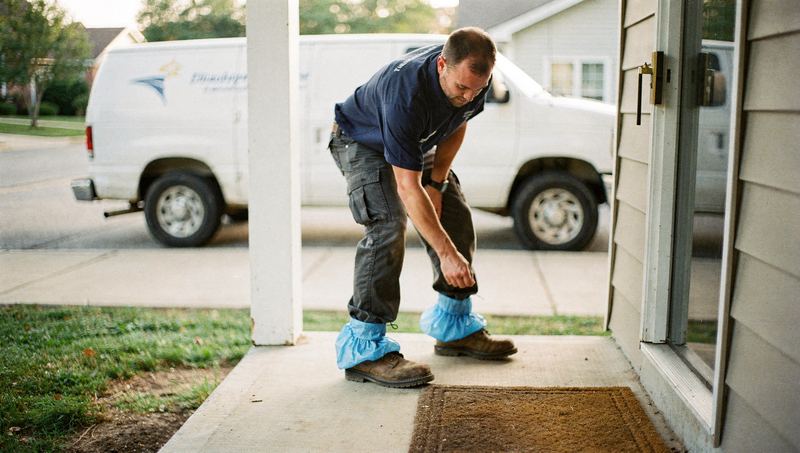
- Put on shoe covers and lay drop cloths before touching anything.
- Explain what you found and the price before starting work.
- Clean up, walk the customer through what you did and leave a written record.
Almost nothing on that list costs money, and customers remember every step.
Every other place your brand shows up
| Touchpoint | What on brand looks like |
|---|---|
| Phone greeting | The same greeting every time: business name, your name, a helpful question |
| Voicemail | Business name, when you'll call back and a number that accepts texts |
| Texts | Signed with a person's name and the business name, never a bare number |
| Estimates and invoices | Logo, clear line items, license number where required, warranty terms |
| Equipment sticker | Your name, phone number and service date on the furnace, water heater, panel or opener |
| Yard signs | Placed with the homeowner's permission during and after the job |
| Google Business Profile | Your real logo, real photos of your team, trucks and work, and polite replies to every review |
| Website | The same name, colors, phone number and promise as the truck |
The equipment sticker deserves a special mention. For HVAC, plumbing, electrical and garage door companies, a sticker on the equipment you serviced is the one piece of branding still in front of the customer on the day they next need help.
Trust signals are part of the brand
Show the things that answer "can I trust them?" and only claim what you can prove:
- Your license and insurance status, stated accurately.
- Background checks, if you actually run them.
- Warranties, written down and explained.
- Real photos of your team and trucks, not stock images.
- Reviews, and how you reply to the unhappy ones. See how to ask for reviews honestly.
Skip claims you can't back up, like "#1 in town," "best in the state" or "lowest prices guaranteed." Homeowners have seen them on every flyer, and they don't build trust.
Keep it consistent as you grow
Brands fall apart slowly: a new hire in a different shirt, a truck lettered by a different shop, an old phone number on a directory. A few habits keep things tight:
- Keep the brand sheet in one place and send it with every order.
- Give every new hire their uniform, the arrival routine and the phone greeting on day one.
- Walk around every truck each quarter and fix peeling vinyl and dents.
- Check that your name, address and phone number match on your Google profile, website and major directories twice a year.
If money is tight, phase it in. Start with the name, logo files, shirts, truck lettering, and a consistent Google profile and website. Add wraps, more uniform options and yard signs as the work grows.
A clear brand also makes your Google Business Profile description and slogan easier to write, because you already know what you stand for.
Your brand lives on Google too, where homeowners compare you before they ever see your truck. Zome's free AI report shows how your profile, website and reviews look to someone choosing between you and the company down the road.