









Contents
- Start with how customers actually find you
- Step 1: Fix your Google Business Profile
- Step 2: Make your website do one job
- Step 3: Build a steady flow of reviews
- Step 4: Answer fast, or someone else will
- Step 5: Market to the customers you already have
- Step 6: Then, and only then, paid advertising
- What to skip at first
- A 30-day starting plan
- How to tell if it is working
Ask five people what "digital marketing" means and you will get five answers: SEO, Facebook ads, a new website, Google Ads, short videos. For a contractor with a full schedule, the problem is not a lack of options. It is knowing what to do first. This guide gives you an order of operations. Each step makes the next one work better, and most of them cost time rather than money.
Start with how customers actually find you
Most home service work starts with a problem. The AC quits on a hot afternoon. A breaker keeps tripping. A stain spreads across the ceiling after a storm. The homeowner picks up a phone, searches, looks at the map results, checks a few reviews, maybe taps through to a website, then calls or texts whoever looks trustworthy and answers.
That path tells you the order to work in:
- Be visible where people search (your Google Business Profile, then your website).
- Look trustworthy when they check you out (reviews, real photos, clear information).
- Be easy to reach and quick to answer (calls, texts, forms).
- Stay in touch with people who already hired you (email and text).
- Only then, pay to reach more people (ads and lead services).
Skipping ahead is where money gets wasted. Running ads to a website with no phone number at the top, or to a Google profile with a handful of old reviews, means paying to send people somewhere that does not convince them.
Step 1: Fix your Google Business Profile
Your Google Business Profile is the listing that shows in the map results and on the right side of Google on a computer. It is free, and for many local searches it is the first thing a homeowner sees. Get it right before anything else.
Then make it a weekly habit. Add two or three photos from recent jobs. Post a short update when you are running a seasonal offer. Answer any questions people ask on the profile. Our Google Business Profile tips and the free Google Business Profile checklist go deeper.
Step 2: Make your website do one job
Your website has one job: turn a visitor into a call, a text or a booking request. It does not need to be fancy. It needs to make the next step obvious. At minimum it should have:
- A phone number and a "Call now" or "Text us" button at the top of every page on a phone
- A headline that says what you do and where, such as "Drain cleaning and emergency plumbing in Springfield and nearby towns"
- A page for each main service you want more of
- A clear list of the towns you serve
- Proof: reviews, photos of real jobs, your license number and proof of insurance
- A short form or booking option for people who would rather not call
Here is a quick test. Open your site on your phone, on cellular data, and count how long it takes to load and how many taps it takes to call you. If it is slow or the phone number is hard to find, fix that before anything else. Our guide to building a contractor website that books jobs walks through every page.
Step 3: Build a steady flow of reviews
Reviews do two things. They help you show up in local results, and they help a stranger decide to trust you. What matters is a steady flow of recent, detailed reviews, not a burst of them once a year.
The fix is a simple routine: ask every customer when the job is done, and make it easy with a direct link. Ask everyone, not only the customers you think are happy. Google's rules do not allow you to pick and choose who gets asked, and honest reviews are more believable anyway. More on that in how to ask for reviews honestly.
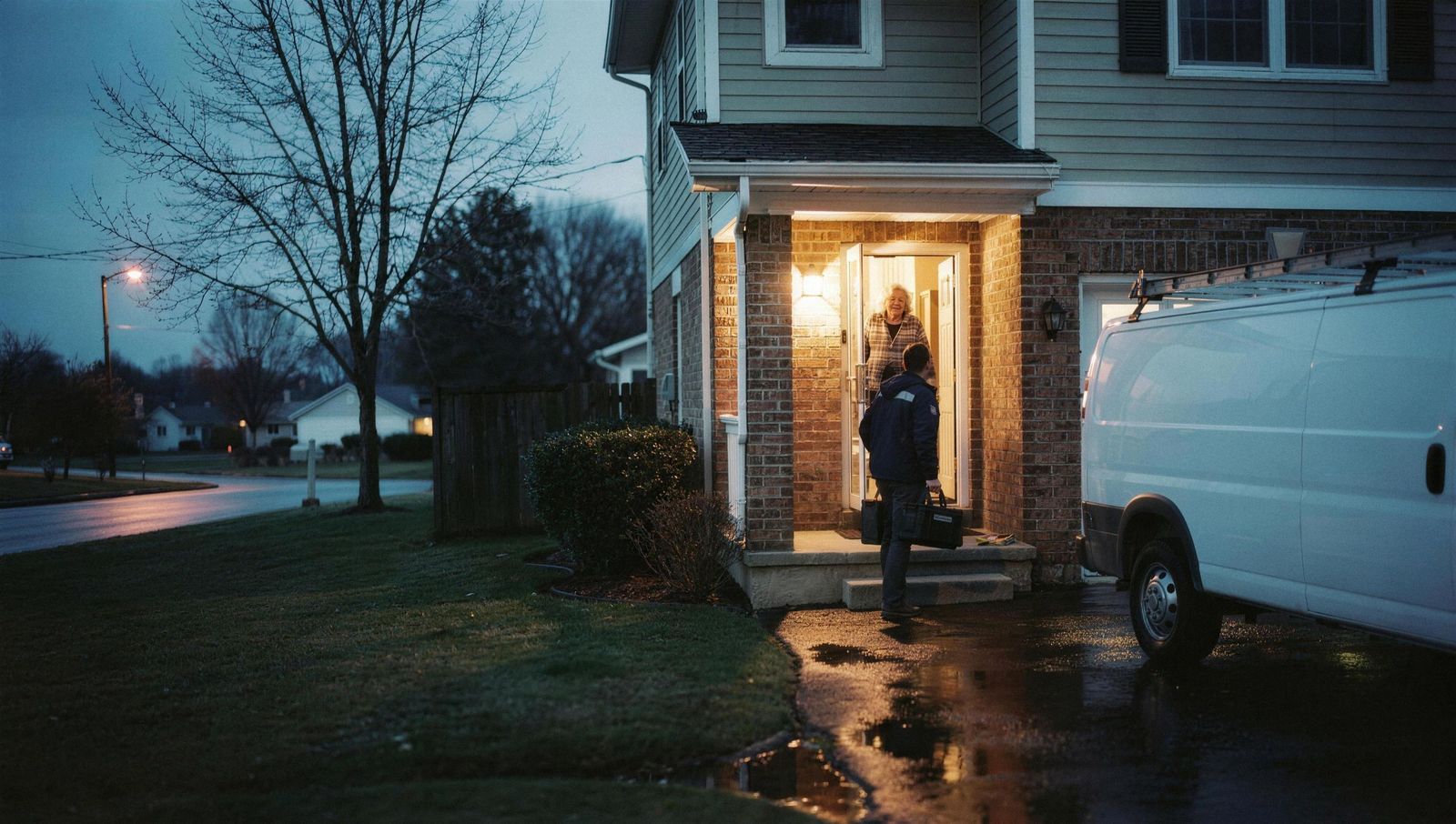
What the tech can say at the door:
- "Thanks for having us out. If you're happy with how today went, a Google review really helps a small company like ours. I'll text you the link so it only takes a minute."
The text that follows:
- "Hi {First name}, thanks for choosing {Business} for your water heater today. If you have a minute, a quick Google review helps neighbors find us: {review link}. Thanks, {Tech name}"
Reply to every review, good or bad, within a few days. A calm, specific reply to a bad review often does more for your reputation than another five-star one.
Step 4: Answer fast, or someone else will
The most expensive lead is the one you already earned and then lost. When you are under a house or on a roof, you miss calls. The homeowner with a flooded basement does not leave a voicemail and wait. They call the next name on the list.
Close the gaps:
- Missed-call text back. When a call goes unanswered, send an automatic text: "Sorry we missed your call. This is {Business}. We're on a job right now. What can we help with? You can reply here with your address and a photo."
- Forms to your phone. Website requests should land on your phone as a text or push notification, not in an inbox someone checks on Friday.
- A useful voicemail greeting. Say when you will call back and invite callers to text instead.
- A response-time target. Pick one for business hours, then check how you are actually doing for a week. Most owners are surprised.
Step 5: Market to the customers you already have
Past customers already know your work. Bringing them back costs a fraction of finding someone new. Yet many contractors never contact a customer again after the invoice is paid.
Start simple. Export your customer list from your invoicing or field service software. Clean up duplicates. Note who agreed to hear from you. Then set up a few messages tied to the calendar and to the work you did:
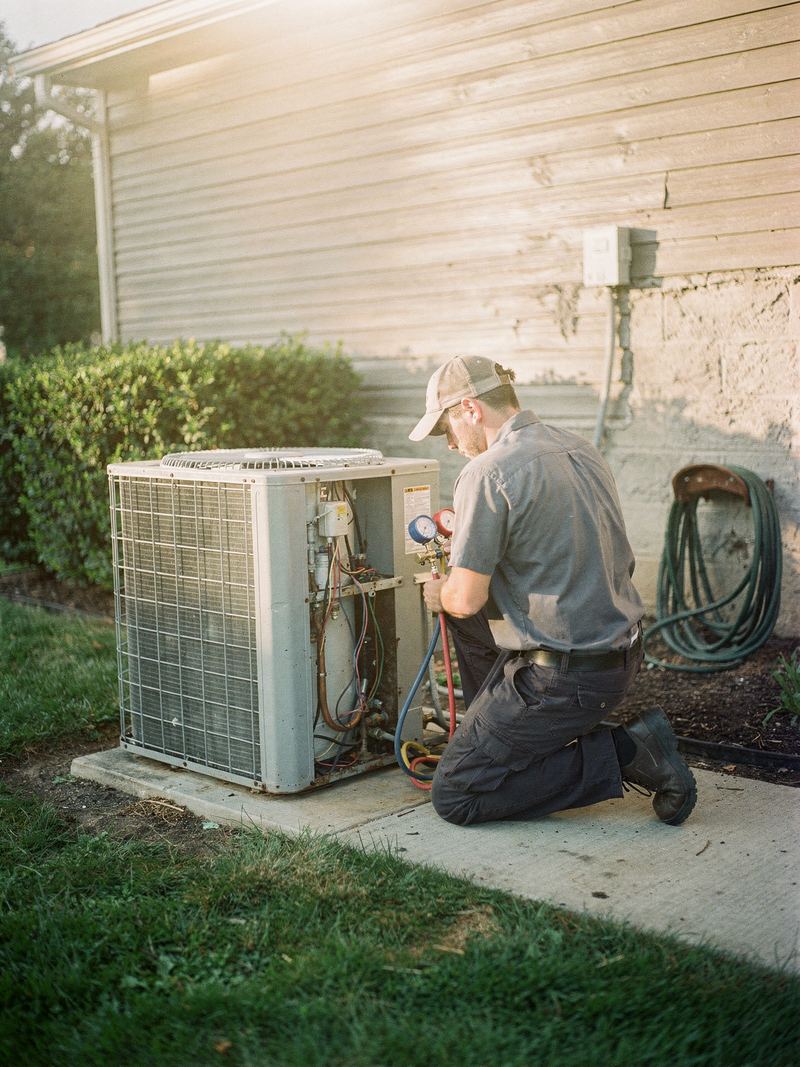
- HVAC: spring AC tune-up and fall furnace check reminders
- Plumbing: an annual water heater check, or a reminder to disconnect hoses before the first freeze
- Landscaping: spring cleanup booking, sprinkler startup and fall winterization
- Pest control: a reminder when the next seasonal treatment is due
- Cleaning: a note after a one-time deep clean offering a recurring schedule
Our guides to email marketing and text message marketing include templates you can copy.
Step 6: Then, and only then, paid advertising
Once your profile, website, reviews and response time are in shape, paid ads have something good to send people to. The main categories work differently:
- Local Services Ads: Google's pay-per-lead ads at the top of many service searches.
- Google Search ads: you pay per click and choose the searches you appear for.
- Lead marketplaces: sites that sell leads, often shared with other contractors.
- Social ads: better for visual work and staying visible locally than for emergency calls.
Our comparisons of Local Services Ads and Google Ads and where paid leads come from explain the trade-offs. Check each platform's current terms before you sign up, because pricing and rules change.
Before you spend a dollar, work out what a new job is worth to you. Here is a simple way, using made-up numbers:
- Take your average gross profit per job (price minus labor and materials). Say it is $200.
- Decide what share of that you are willing to spend to win a new customer. Say 25%, which gives you $50 per booked job.
- Divide by how often a lead turns into a booked job. If one in two leads books, you can afford up to $25 per lead.
Plug in your own numbers. If a channel costs more than your ceiling after a fair test, pause it, or fix what happens after the lead arrives before you try again.
What to skip at first
A lot of marketing effort goes into things that feel productive but rarely book jobs for a small crew:
- Posting every day on five social networks. Pick one, if any.
- "SEO packages" that promise a #1 ranking. Nobody can guarantee that, because Google decides.
- Paid directory listings you have never heard a customer mention.
- A full rebrand before the basics are working.
- Chasing viral videos instead of answering the phone.
One exception: if your work is visual, like landscaping, painting or roofing, a habit of posting before-and-after photos to one social account is worth the ten minutes it takes.
A 30-day starting plan
You can do this in two or three hours a week.
| Week | Focus | What to do |
|---|---|---|
| 1 | Google profile | Fix name, categories, hours and service area. List every service. Upload ten real job photos. |
| 2 | Website | Add tap-to-call and text buttons, a clear headline, your service list, towns and reviews. Test it on your phone. |
| 3 | Reviews and response | Set up a review link text. Turn on missed-call text back. Ask every customer this week. |
| 4 | Past customers and tracking | Export your customer list. Send one useful seasonal email. Start asking every caller "How did you hear about us?" |
After the first month, keep the weekly habits going and add one new thing a month.
How to tell if it is working
You do not need a complicated dashboard. Track a handful of numbers once a month in a simple spreadsheet:
- New calls, texts and form or booking requests
- Where each one came from (ask every caller, every time)
- How many became booked jobs
- New reviews
- Revenue from new customers versus repeat customers
Your Google Business Profile also shows calls, website clicks and direction requests from the listing. Our guides to marketing analytics and the numbers every home service business should track cover this in more detail.
If you are not sure where your gaps are, Zome's free AI report checks your Google profile, website and reviews against the businesses ranking around you and shows what to fix first. It is a quick way to decide where your first month should go.