



Contents
Heating and cooling demand follows the weather. In a heat wave the phone won't stop, and in April and October you wonder where everyone went. The advertising that holds up year after year matches how homeowners actually buy HVAC: urgently when it breaks, reluctantly for maintenance, and carefully for a replacement.
Below are twenty ideas grouped by those three moments, plus offline and referral ideas, each with copy you can adapt. Swap in your own details, and only promise what your shop can deliver every time.
Before you spend a dollar, set up tracking
Every idea below is a guess until you can see which ones produce booked jobs.
- Use a separate tracking phone number for each channel (search ads, mailers, truck, radio).
- Send each offer to its own page or link so you can count visits and form fills.
- Ask every new caller "How did you hear about us?" and record the answer on the job.
- Work out your cost per booked job for each channel: channel spend ÷ booked jobs from that channel.
- Then compare it with what those jobs earned: gross profit from the channel's jobs ÷ channel spend. Use gross profit, not revenue, because a $9,000 system with thin margins can be worth less than it looks.
For more on attribution, see marketing analytics: which calls came from where.
Ads that catch urgent demand
1. Search ads for no-cool and no-heat calls
When the AC dies, people search. Bid on repair searches in your service area, like "ac repair [town]", "furnace not working" and "heat pump repair near me." Add negative keywords to block searches that will never book: "DIY", "parts", "jobs", "salary", "how to", "manual."
Copy: Headline: "AC Repair in [Town], Fast Local Service." Second headline: "Price Before We Start." Description: "Licensed techs with stocked trucks. Call now or book online in two minutes."
Run these ads only during hours when someone answers the phone.
2. Local Services Ads
These are the ads with a Google badge that often appear at the very top of a local search. Instead of paying per click, you generally pay per lead, and your reviews and responsiveness affect where you show. Google's rules and pricing change, so check the current terms. See Local Services Ads vs Google Ads for how the two compare.
3. Heat-wave and cold-snap boosts
Write your extreme-weather ads now, while it's quiet. When the forecast turns, raise budgets and switch them on, but only if you have capacity. Pause them the moment you're booked out; paying for calls you can't run hurts twice.
Copy: "Heat wave this week. If your AC is struggling, call before it quits. [Company] has openings in [town]." Winter version: "Cold snap coming. Book a furnace check before the first freeze."
4. Google Business Profile posts and photos
Not an ad, but it works like one, because it's what people see before they call. Post weekly: a recent install, a seasonal reminder, a quick tip. Add real job photos. The Google Business Profile checklist covers the basics.
Ads that fill the shoulder seasons
5. Pre-season tune-up campaigns
Spring AC checks and fall furnace checks keep techs busy when repair calls slow down. Start them several weeks before the first hot or cold spell, not during it.
Copy (postcard): "Get your AC checked before the first 90-degree day. Book a spring tune-up with [Company]. [Phone], [web address]"
If you advertise a low tune-up price, say plainly what's included. Customers who feel baited by a cheap tune-up and a long list of "problems" don't come back, and they talk.
6. Maintenance membership ads
A membership sells certainty: the system gets looked at, and the customer gets priority when it's 95 degrees. List only benefits you actually deliver.
Copy: "Two visits a year, priority scheduling when it's hot out, and no more guessing when your system was last checked. Join the [Company] comfort plan."
See how to build a maintenance membership program and the example playbook for an HVAC company filling the shoulder seasons with memberships.
7. Comfort problems, not equipment
Homeowners don't search "zoning" or "duct static pressure." They search "upstairs too hot." Ads about the problem reach people who don't know what they need yet.
Copy: "One room always too hot? We'll find out why, and show you the options before you spend anything."
Be careful with indoor air quality claims. Say what equipment does (filters particles, controls humidity) rather than promising health outcomes.
8. Ductless for the rooms that were never comfortable
Garages, additions, sunrooms and finished attics are a clear, visual pitch.
Copy: "Finally use the bonus room in July. Ductless heating and cooling for garages, additions and sunrooms. Free estimate." (Only say "free" if it is.)
Ads for replacement buyers
Replacement buyers take their time, get several quotes and read reviews. Your ads should make comparing easy and make you look like the safe choice.
9. The written-options offer
Copy: "Thinking about replacing your system? Get three options in writing, with the full price of each, before anyone asks you to sign."
This works best if your proposals really do show options. See good, better, best pricing.
10. Financing ads
Copy: "New system, monthly payments. Ask us about financing options."
Financing ads can carry legal disclosure requirements. Use the wording your financing provider approves, and never advertise a rate or term you haven't confirmed. Some ad platforms also restrict targeting on ads about credit, so check their rules first.
11. Rebates and incentives, verified first
Utility rebates and government incentives come and go, and they change. Confirm what's currently available in your area before you mention any of them.
Copy (only if true): "Your utility may offer rebates on qualifying high-efficiency equipment. We'll check what applies to your home and handle the paperwork."
12. Retargeting people who looked at your replacement page
Show ads to people who visited your replacement or financing pages. Use the ad to answer the doubts that stop people from calling.
Copy: "Still comparing quotes? Here's everything included in a [Company] install, in writing."
13. Direct mail to older neighborhoods
Mail to neighborhoods built long enough ago that original equipment is likely near the end of its life. Saturation mail, such as the Postal Service's Every Door Direct Mail, lets you target by route. Check current rules and rates.
Copy (postcard front): "Still running the system the builder put in? Get a free check before summer, and an honest answer on whether to repair or replace." (Only say "free" if it is.)
Plan several mailings over a season rather than one drop, and give each a tracking number.
Offline ads that still pull their weight
14. A clean, readable truck
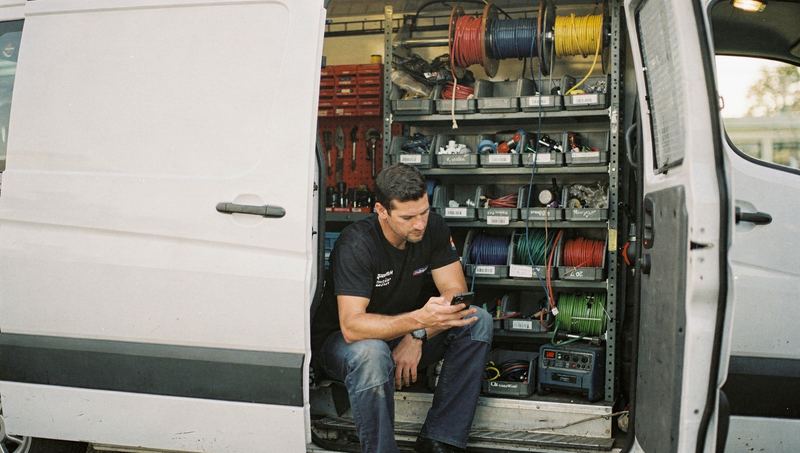
Your truck is a moving billboard and a trust signal in the customer's driveway. Keep the design simple: company name, "Heating and Cooling", phone number and a short web address, large enough to read from a car length away. Skip the QR code; nobody can scan it in traffic. Wash the truck.
15. Yard signs at installs
With the homeowner's permission, place a sign for a week or two after an install: "New comfort system installed by [Company]." Check local and HOA sign rules.
16. Door hangers after a job
After an install or repair, leave hangers on nearby doors. Never name the customer or give their address.
Copy: "We're working in your neighborhood this week. If your system is getting older, we can check it while we're close by. [Phone]"
17. Equipment stickers and fridge magnets
Put a sticker on every unit you service with your phone number and the date of the last visit. When the system acts up, the number is right there. A magnet with your number on the fridge does the same job indoors.
18. Local radio or streaming audio
Radio works for familiarity more than instant calls. Keep the script simple, and repeat a memorable web address rather than a long phone number.
Script (30 seconds): "When your AC quits on the hottest day of the year, you want someone who picks up the phone. At [Company], we've been keeping [area] homes comfortable since [year]. Our techs give you the price before they start, and they clean up before they leave. Book a tune-up today at [short web address]. That's [short web address]."
19. Community sponsorships
Youth sports, school events and local fundraisers build name recognition. You won't be able to track calls from a banner at the ballfield, so treat it as brand spending and keep it modest.
Social and referral ideas
20. Short videos from real jobs and a referral card
Two ideas that feed each other.
Short video. Film the clogged filter next to the new one, the dirty coil before and after, or a quick "three things to check before you call us for no-cool" (the thermostat, the breaker, the filter). Helpful beats clever. Run small, local boosts on the best ones.
Referral card. Leave one with every customer who's happy.
Copy: "Know someone whose AC is on its last legs? Give them this card. They get [offer], and we'll send you [thank-you] when they book."
Home inspectors, real estate agents and property managers all see aging equipment. A one-page introduction and fast service on the first job they send you will do more than any ad. See how to win commercial contracts and property managers.
What to skip or handle with care
- Bait pricing. A rock-bottom tune-up that turns into a hard sell damages your reviews.
- Scare tactics. Carbon monoxide is serious. Be accurate and calm, not alarming.
- Shared leads without tracking. If you buy leads, track the close rate by source. See where paid leads come from.
- Claims you can't back up. "24/7" means someone answers at 2am. "Same day" means same day.
How to pick your first three
| Your situation | Start with |
|---|---|
| Small budget, need calls now | Google Business Profile, Local Services Ads, search ads for repair |
| Busy summers, dead shoulder seasons | Tune-up campaigns, membership ads, equipment stickers |
| Want more replacements | Written-options offer, retargeting, direct mail to older neighborhoods |
| Plenty of calls, low close rate | Fix the phone script and proposals before spending more on ads |
Give each channel a fair test of a full season, with its own tracking number, then keep the ones where gross profit clearly beats spend. For how to fit them together, see how to write a marketing plan for your home service business and seasonal promotion ideas.
Before you pick, it helps to know where you stand. Zome's free AI report shows which HVAC companies outrank you on Google in your area and what's holding your listing and website back.