
Contents
- The phone shows up in every step of the job
- 1. Run the thumb test on your website
- 2. Treat your Google Business Profile as your mobile home page
- 3. Answer fast, or text back within minutes
- 4. Use texts to run the job, not only to sell
- 5. Buy mobile ads that make the phone ring
- 6. Shoot your marketing on the phone you already carry
- 7. Bridge print to phone with QR codes
- 8. Let customers pay from their phone
- How to measure mobile marketing
- A 30-day plan
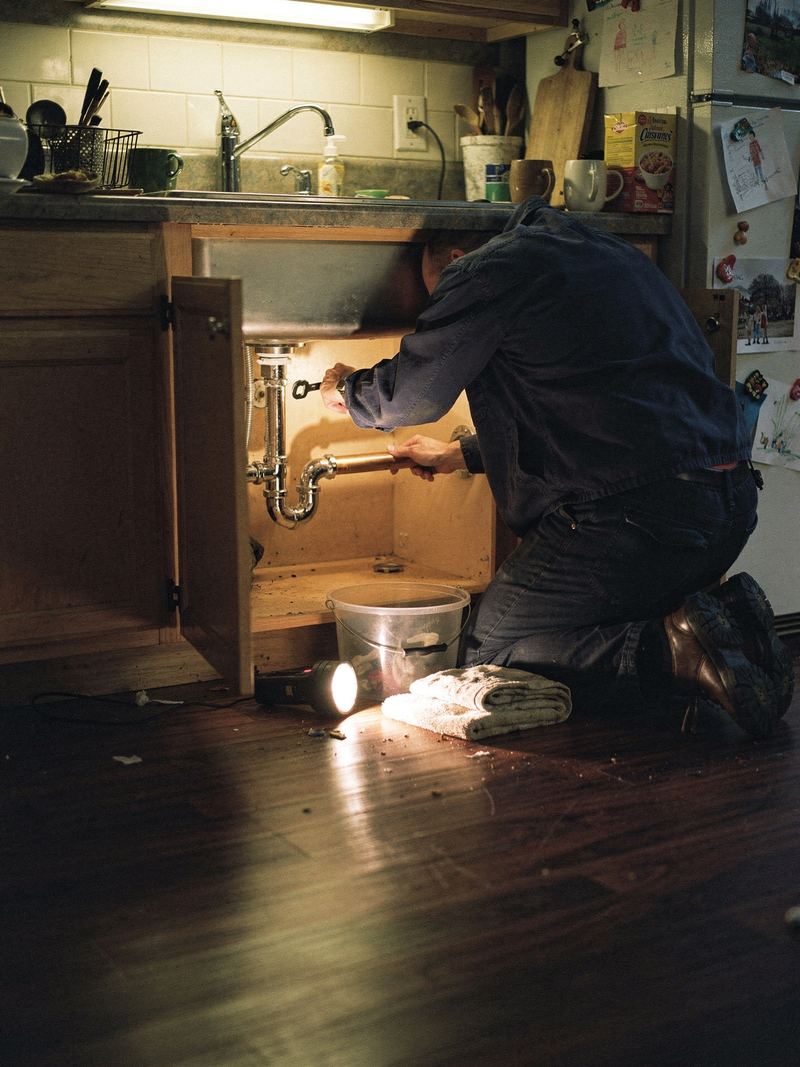
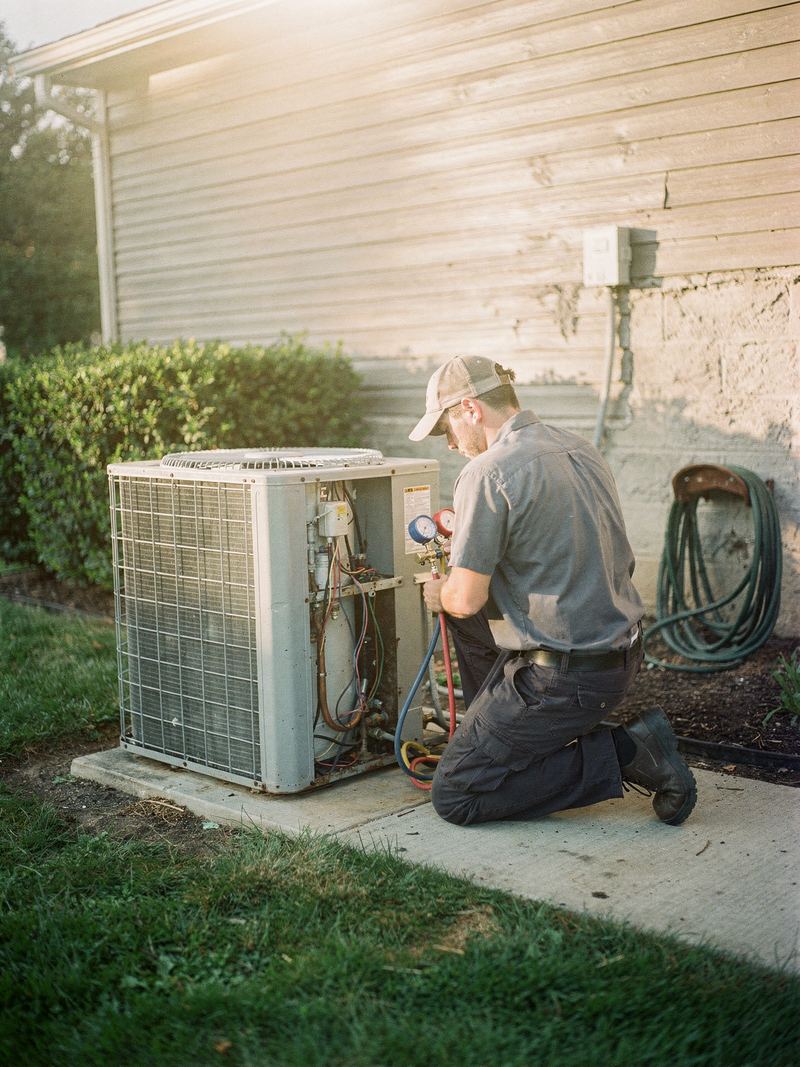
When a water heater lets go or the AC quits on a hot afternoon, the homeowner doesn't walk to a desktop computer. They grab their phone, search, tap a result and call. For a service business, mobile marketing isn't a separate channel. It's making sure every step from that search to the paid invoice works on a small screen, for someone in a hurry.
This guide covers the eight places where that matters, with checks you can run today, text scripts you can copy and a 30-day plan.
The phone shows up in every step of the job
| Step | What the customer does on a phone | What you need |
|---|---|---|
| Search | Types "furnace repair near me" or asks a voice assistant | A complete Google Business Profile and a fast, clear website |
| Contact | Taps call, or fills in a form at 10pm | A tappable number, someone who answers, a short form |
| Waiting | Checks texts for a time and a name | Confirmation and on-my-way texts |
| On the job | Looks at options, signs, sends photos | Digital estimates and signatures |
| Paying | Taps a link or a card | Text-to-pay invoices and card payment on site |
| After | Leaves a review, rebooks, sends your number to a neighbor | A review link, reminders, a referral ask |
If one of these steps breaks on a phone, the rest of your marketing is paying for a customer who never arrives.
1. Run the thumb test on your website
This takes ten minutes. Do it today.
- Turn off Wi-Fi so you're on cellular data, like a customer in a basement.
- Search your main service and town, for example "water heater replacement [your town]", and open your own site from the results.
- Count the seconds until you can see what you do and a way to call.
- Without scrolling, find a phone number and tap it. Does your phone offer to dial?
- Fill in your contact or booking form with one thumb. Time it.
- Hand your phone to someone who has never seen your site and ask them to find your service area and hours. Watch where they get stuck.
Then fix what failed.
For a deeper walk-through, see the service page checklist and how to build a contractor website that books jobs.
2. Treat your Google Business Profile as your mobile home page
On a phone, a local search usually shows a map and a few businesses before any websites, and plenty of people call straight from that listing. For many customers, your profile is the first page they see.
- Choose the primary category closest to the work you most want, and add secondary categories for the rest.
- Use a phone number that rings someone who will answer, and hours that are true.
- List your services with a plain sentence about each.
- Add sharp, well-lit photos from real jobs every week or two.
- Add a booking or quote link to a page built for phones.
- Reply to every review, good and bad, calmly and specifically.
Google changes profile features from time to time, so check what yours offers now. For details, see the Google Business Profile tips guide and the Google Business Profile checklist.
3. Answer fast, or text back within minutes
On a phone, the next company is one tap away. You miss calls for good reasons, like being under a sink or on a roof, but the customer doesn't wait. Decide who answers each hour of the week (you, an office person, an answering service or an AI receptionist), then add a missed-call text as a safety net.
Missed call, during the day: "Hi, this is [name] with [company]. Sorry we missed your call, we're on a job right now. Reply with what's going on and your address, and we'll call you back within [a time you can keep]."
Missed call, after hours: "Thanks for calling [company]. We're closed for the night and back at [time]. If this is urgent, like [an active leak / no heat / a breaker that won't reset], reply URGENT and [what actually happens next]. Otherwise send a few details and we'll call first thing."
Safety line if you work on gas appliances: "If you smell gas, leave the house and call your gas utility's emergency line or 911 from outside."
Only promise response times you'll keep. "Within 15 minutes" followed by a callback two hours later is worse than no text.
Track your missed-call rate every week (the formula is at the end of this guide). If it climbs in busy season, that's where your marketing money is leaking.
4. Use texts to run the job, not only to sell
Service texts are the mobile marketing customers thank you for. They cut no-shows and "where's the tech?" calls, and they set up the review request.
| Text | When | Example |
|---|---|---|
| Confirmation | Right after booking | "You're booked with [company] for Tuesday, 8 to 10am. Reply C to confirm or R to reschedule." |
| Reminder | The day before | "Reminder: [tech] arrives tomorrow between 8 and 10am for your AC tune-up. Please clear a path to the outdoor unit and the furnace." |
| On my way | When the tech leaves | "[Tech] is on the way and should arrive around 9:15. Here's a photo so you know who's at the door: [link]" |
| Job done | At completion | "Thanks for having us today. Your invoice and the photos from the job are here: [link]" |
| Review request | Same day | "If we earned it, a Google review helps a small local business a lot: [link]. If anything wasn't right, reply here and I'll make it right. [owner name]" |
| Reminder to rebook | Months later | "It's been about a year since we flushed your water heater. Want us to schedule this year's? Reply YES and we'll send times." |
Adapt them to your trade: a cleaner's reminder mentions the lockbox and pets, a landscaper's asks for the side gate to be left open, a roofer's asks for cars to be out of the driveway before 7am.
Promotional texts, like a spring tune-up offer, carry more rules:
- Get clear permission first, such as an unticked checkbox on your booking form that says what you'll send.
- Name your business in every message, include "Reply STOP to opt out" and honor opt-outs immediately.
- Don't text late at night, and keep promotions rare.
- In the US, carriers generally require businesses texting from software to register their number and use case (often called A2P 10DLC registration). Your texting provider will walk you through it.
Rules differ by country and state and they change, so check with your provider, and a lawyer if you're unsure. More in text message marketing, done right.
5. Buy mobile ads that make the phone ring
On a phone, the best ad is often the one with a call button.
- Run call-focused ads only when someone answers. A paid click that rings voicemail is money out the window.
- Count real calls, not clicks. Where the platform allows it, count a call as a lead only when it lasts long enough to be a real conversation.
- Match the ad to the page. If the ad says "same-day water heater replacement," so should the top of the page it opens.
- Target your real service area, not the whole metro.
Choosing between Google's two main ad types? See Local Services Ads vs Google Ads.
Short ad copy that reads well on a small screen (only use claims that are true for you):
- HVAC: "AC out? Repair in [town], same day when available. Tap to call."
- Plumbing: "Water heater leaking? Licensed plumbers, options in writing before we start."
- Electrical: "Breaker keeps tripping? Licensed electrician, price before the work."
- Roofing: "Storm damage? Roof inspection with photos of everything we find."
- Landscaping: "Weekly mowing openings on your street. Get a price by text."
- Cleaning: "Move-out clean before your walkthrough. Book online in two minutes."
6. Shoot your marketing on the phone you already carry
Short clips of real work build more trust than stock photos of smiling people in hard hats. Good material: a sewer camera clip of root intrusion, a clogged filter next to a new one, a scorched panel next to its labeled replacement, lifted shingles before and after, the same corner of a yard before and after a spring cleanup, or an oven before and after a deep clean.
Ask the customer's permission, and keep house numbers, license plates and faces out of the frame. Use the best shots on your Google profile, website, social accounts and estimates. More in Instagram for contractors.
7. Bridge print to phone with QR codes
QR codes work where people stand still: leave-behind cards, invoices, fridge magnets, yard signs and the service sticker on a furnace or water heater. Point each one to a specific page (reviews, maintenance plan sign-up, booking) with its own link so you can count scans. Skip the QR code on the truck; nobody can scan it in traffic. A short web address and a big phone number work better there.
8. Let customers pay from their phone
Text-to-pay invoice links, card payments on site and cards on file for recurring work (weekly lawn care, biweekly cleans) cut the time between finishing a job and having the money. For a card on file, get written authorization and say exactly when you'll charge it. Compare options in how to choose a payment app.
How to measure mobile marketing
Track these weekly in a notebook or spreadsheet:
| Number | Formula | What it tells you |
|---|---|---|
| Missed-call rate | Missed inbound calls ÷ total inbound calls | Whether you're paying for calls nobody answers |
| Speed to lead | Average minutes from form or text to first real reply | Whether online leads go cold |
| Booking rate | Booked jobs ÷ answered calls and forms from new customers | Whether the conversation wins the job |
| Cost per booked job | Ad spend on a channel ÷ booked jobs from that channel | Which ads earn their keep |
For the full set, see the numbers every home service business should track.
A 30-day plan
- Week 1: Run the thumb test. Fix the call button, the phone number and the form.
- Week 2: Clean up your Google Business Profile and add ten real job photos.
- Week 3: Write your confirmation, reminder, on-my-way and review texts. Set up a missed-call text back.
- Week 4: Test one mobile ad or post one short job video a week. Start tracking missed-call rate and booking rate.
If you want an outside view of how your business looks to a stranger holding a phone, Zome's free AI report checks your website's mobile speed and your Google listing, shows who outranks you locally, and lists what to fix first in plain language.