





Contents
You don't need fifty marketing ideas. You need three that fit your business, done well and kept up. But it helps to see the whole menu before you choose. Here are fifty practical ideas for home service businesses, grouped by what they help with, followed by a short guide to picking your first three.
Get found on Google
1. Finish every part of your Google Business Profile
Choose the most accurate primary category, add secondary categories that match real services, list your services, set your service area and keep regular and holiday hours right. A half-finished profile gives searchers an easy reason to scroll past you. Google Business Profile tips walks through each field.
2. Add fresh job photos every week
Photos of real work, like a new water heater, a cleared gutter or a finished accent wall, show you're active and good at what you do. Keep house numbers, faces and anything that identifies the customer's home out of the shot unless you have permission.
3. Give every service its own page
"AC repair", "furnace installation" and "duct cleaning" are different searches from different customers. A separate page for each, with what's included, real photos and a clear way to book, gives you a better shot at each search. A service page that earns the next click has a checklist.
4. Build town pages only where you really work
A page for each town you serve helps if it says something real: jobs you've done there, local conditions like hard water, older wiring or clay soil, and how quickly you can get there. Copy-and-paste pages with only the town name swapped help nobody.
5. Make your name, address and phone match everywhere
Check your listings on map apps, directories, industry sites and your local chamber's site. Fix old phone numbers, old addresses and spelling differences. It's tedious work that pays off quietly.
6. Answer real customer questions on your website
Write down the questions customers ask on the phone. "Why does my breaker keep tripping?" "Is it worth repairing a 15-year-old furnace?" "How long does exterior paint need before it rains?" Answer each one clearly on your site. They're the same questions people type into search.
7. Publish an honest "what affects the price" page
Customers want a rough idea of cost before they call. Explain what drives the price of your main services (access, materials, size, permits) and share starting prices from your own jobs if you're comfortable. Service price list examples by trade shows a few layouts.
8. Get into the directories you've earned
If you're a certified installer for a manufacturer, a member of a trade association or part of your local chamber, make sure you're listed in their "find a pro" pages with a link to your website. These listings are hard for competitors to copy.
Turn visits into calls
9. Put tap-to-call and your hours at the top of every mobile page
Someone with a flooded basement is on their phone. They should be able to call you with one tap without scrolling, and see straight away whether you answer at night.
10. Let customers book simple jobs online
Tune-ups, estimates, recurring cleans and gutter cleaning are easy to book online. Some customers would rather pick a slot at 10 pm than call at 8 am. How to add online booking to your website explains how to set limits so you only get the jobs you want.
11. Text back every missed call
When you're on a ladder or under a sink, a missed call can become someone else's job. An automatic text such as "Sorry we missed you, this is [Company]. What can we help with?" keeps the conversation going until you can call back.
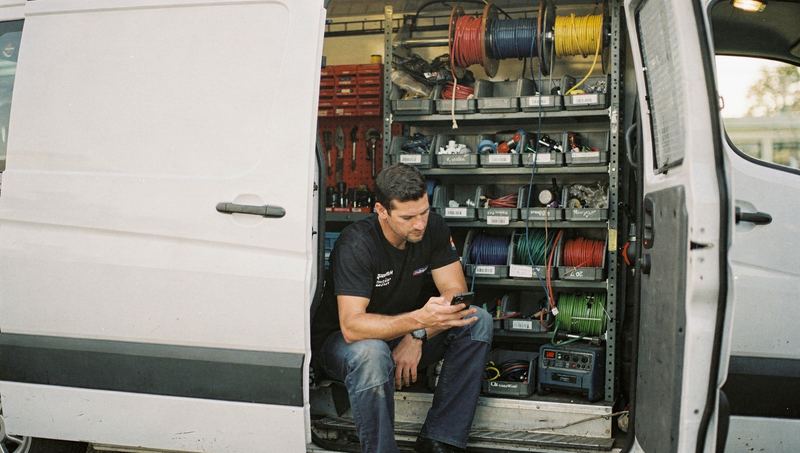
12. Replace stock photos with your real crew and trucks
Homeowners are letting you into their house. Show them who's coming. Real photos of your team, trucks and work build more trust than any stock image of a smiling model in a spotless hard hat.
13. Tell people what happens after they hit submit
On every contact and quote form, say what happens next, such as "We'll text you to confirm a time within one business hour." Only promise what you can keep. Uncertainty is why people fill in three forms for three companies.
14. Put proof next to the call button
License number, insurance, your review rating, warranty terms and years in business belong where people decide, near the phone number and the booking button, not buried on the About page.
15. Offer instant price ranges for standard jobs
For work you can price from a few answers, like gutter cleaning by stories, carpet cleaning by rooms or a standard clean by bedrooms and bathrooms, let customers see a starting price before they call.
Earn more reviews, fairly
16. Ask in person, then send the link the same day
At the end of a job, the tech asks: "Would you mind leaving us a review? It really helps a small business like ours." A text with a direct link follows within the hour, while the job is fresh. Suggest they mention what you did, in their own words, but never script the review for them.
17. Leave a card with a QR code
A small card left on the counter, with a QR code to your review page, catches the customer who didn't have time when the tech asked. Keep it simple: a thank-you, one line and the code.
18. Reply to every review
Thank people for good reviews and mention the job ("Glad the new garbage disposal is running quietly"). Reply to bad ones calmly, once, with an offer to sort it out offline. Future customers read your replies as closely as the reviews themselves.
19. Make a quality check call after every job
A quick call or text the day after ("Is everything still working?") catches problems while you can still fix them. Keep this separate from review requests, and ask every customer for a review, not just the happy ones. Asking only the customers you expect to be happy can break review platform rules. See Ask for reviews without filtering the truth.
20. Put reviews where people decide
Quote reviews on the service pages they relate to, in social posts and alongside your estimates. A review about a fast furnace repair belongs on the furnace repair page. Use first names and towns only, and ask before using anything more.
Around the neighborhood
21. Hang door hangers around every job
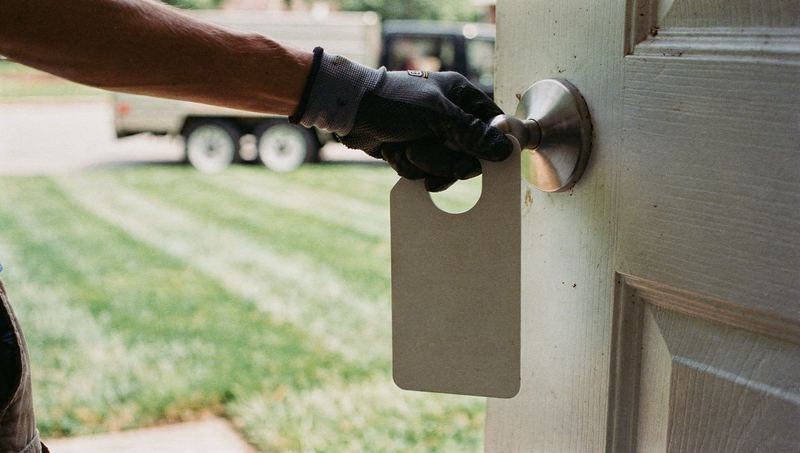
When you finish a job, leave a door hanger on the five to ten nearest homes: "We were working on your street today. If you need us, here's how to reach us." Neighbors often share the same age of house, the same trees and the same problems. Check local rules on door-to-door materials first.
22. Put up a yard sign, with permission
A roofing, painting, fencing or landscaping job is a billboard for as long as you're there. Ask the homeowner if you can place a sign during the job and for a short time after, and check HOA and city rules.
23. Letter or wrap your trucks, and keep them clean
Your trucks sit in driveways and drive main roads all day. A clear name, phone number and website that can be read at a glance works harder than a clever design no one can make out. A dirty truck sends the wrong message about the work.
24. Put a service sticker on every unit you touch
A small sticker with your name and number on the furnace, water heater, electrical panel, garage door opener or irrigation controller means that when it acts up again, your number is the first one they see.
25. Sponsor something local that families care about
Youth sports, school fundraisers, a park cleanup. Pick something your customers actually attend, show up in person and treat it as being part of the community rather than a lead source you track to the dollar.
26. Teach a free homeowner workshop
"How to winterize your home", "What to do when a pipe bursts", "Spring lawn care basics". Offer it at the library, a hardware store or a community center. People remember who helped them before they needed to hire anyone.
27. Be genuinely helpful in neighborhood groups
In local online groups and neighborhood apps, answer questions with real advice and follow each group's rules on promotion. Explaining how to reset a tripped GFCI outlet earns more trust than posting an ad.
28. Send direct mail to the homes that fit the job
Target by what you know about the homes, not only by zip code: older neighborhoods for panel upgrades or repipes, homes with pools for pool service, streets hit by a recent hailstorm for roof inspections, offered honestly and without pressure. Use a tracking number or code so you know what worked.
Social media and content
29. Post a before-and-after every week
It's the most useful post format for trades: a rusted water heater and its replacement, an overgrown yard and its cleanup, a weathered deck and its refinish. Get the customer's OK and leave out anything that identifies the home. Instagram for contractors has more on this.
30. Film short "what we found" videos
Thirty seconds on the scorched wire behind the outlet, the root mass pulled from the sewer line or the wasp nest in the soffit. Explain what it means in plain language and what you did about it. People share these with friends.
31. Run a seasonal tip series
One short tip a week tied to the season: change your filter before the heat arrives, disconnect hoses before the first freeze, clear gutters after the leaves drop. Useful posts get saved and remembered.
32. Introduce your team
Post a short spotlight on each tech: how long they've been in the trade, what they like about the work, the strangest thing they've found on a job. Customers like knowing who's coming, and it helps with hiring too.
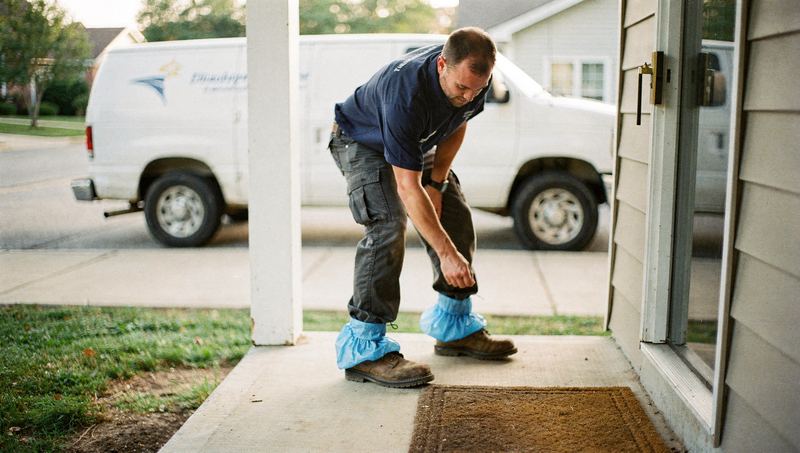
33. Show how you protect the home
Shoe covers, drop cloths, floor runners and the cleanup at the end. The unglamorous parts of your process are exactly what a nervous homeowner wants to see.
34. Turn one job into five pieces
One good job can become a Google Business Profile post, a social post, a website gallery entry, a short video and a line in your next customer email. Take photos with that in mind: before, during, after and close-ups of the details.
Paid, timed and tracked
35. Advertise one profitable service first
Instead of "we do it all" ads, pick the service with the best margin and steady demand, such as water heater replacement or EV charger installation, and build a focused ad and landing page for it. Learn from it, then expand.
36. Time campaigns to the weather
The first heat wave, the first hard freeze, the week after a big storm, the start of leaf season. Write the messages ahead of time and switch them on when the weather turns. Seasonal promotion ideas for home services has ideas for each season.
37. Test pay-per-lead options carefully
Some ad programs and lead marketplaces charge by the lead rather than by the click. Check each one's current terms and whether your trade and area qualify, start with a small budget, respond fast and track how many leads become booked jobs. Local Services Ads vs Google Ads compares two common options.
38. Give each channel its own tracking number
Use separate call tracking numbers for ads, mailers and truck lettering, and tag web forms by where the visitor came from. Without them, you're guessing which marketing works. Marketing analytics: which calls came from where explains the setup.
39. Follow up on every open estimate
Leads cost money, so don't waste them by sending a quote and waiting. A simple sequence (a text the next day, a call on day three, a last check-in around day ten) wins jobs that would otherwise have gone quiet.
Partnerships
40. Become the go-to for real estate agents
Agents need fast, reliable help before listings and after inspections. Offer quick turnaround on repair lists, clear written quotes and photos of finished work they can pass to buyers.
41. Work with property managers and landlords
Rental properties need steady maintenance, turnover work and emergency response. Reliability, clear communication and clean invoices often matter to them as much as price. How to win commercial contracts and property managers explains what they look for.
42. Get to know local home inspectors
Inspectors find the problems, and homeowners then need someone to fix them. Introduce yourself, explain what you do and make it easy for them to pass your name on when a buyer asks who to call.
43. Swap referrals with complementary trades
A plumber, an electrician and an HVAC company see each other's problems every day. So do painters and cleaners, roofers and gutter installers, landscapers and fence builders. Agree to pass work to each other, and follow up on every referral you receive.
44. Partner with builders and remodelers
General contractors and remodelers who don't have your trade in-house need dependable subcontractors. Show up when you say you will, keep the site clean and they'll call you again.
Keep customers coming back
45. Start a simple referral program
Ask happy customers to pass your name on, give them an easy way to do it, such as a link or a card, and thank them with something real when a referral books, like a credit on their next service. Never offer rewards in exchange for reviews.
46. Launch a maintenance membership
Scheduled visits plus a few perks, paid monthly or yearly. It fills slow seasons and keeps you the first call when something breaks. How to build a maintenance membership program covers design and pricing.
47. Send reminders based on the last job
Most jobs have a natural next date: a filter change, a water heater flush, the next pest treatment, gutter cleaning after the leaves fall, a deck reseal. Note it when you close the job and send a reminder when it comes due.
48. Send seasonal messages to past customers
A few times a year, send customers who've agreed to hear from you something useful: a seasonal checklist, a heads-up before your busy season, a few open slots. Keep it short and easy to opt out of. Text message marketing for home services, done right covers permission and timing.
49. Check in on the anniversary of big jobs
A year after a new roof, a system replacement or a landscape install, send a note: "How's everything holding up?" It catches warranty issues early, reminds them you exist and is a natural moment to ask for a referral. After your biggest jobs, make it handwritten.
50. Win back customers who've gone quiet
Pull a list of customers you haven't seen in 18 months or more. Send a personal note or make a call: "We serviced your furnace two winters ago. Is it due for a check?" Some of them simply lost your number. Customer retention for home service businesses has more ways to keep them.
How to choose your first three
Pick one idea from each of these groups:
- One to get found: usually idea 1, 2 or 3.
- One to win more of the calls you already get: idea 9, 11 or 39.
- One to keep customers: idea 16, 45 or 47.
For each one, decide who does it, when it happens and how you'll know it's working. Give it 30 to 60 days before you judge it, and add a new idea only when the first three run without you pushing them. Here's what that might look like:
| Idea | Who owns it | When it happens | How you'll measure it |
|---|---|---|---|
| Review request after every job | Office manager | Same day the job is completed | New reviews per month |
| Missed-call text back | Owner, set up once | Every missed call | Missed calls that turn into booked jobs |
| Door hangers around each job | Lead tech | End of every job | Calls to the door hanger's tracking number |
If you'd like a clearer view of which ideas would make the biggest difference for your business, Zome's free AI report checks your Google profile, website and reviews and shows where you stand against nearby competitors.